
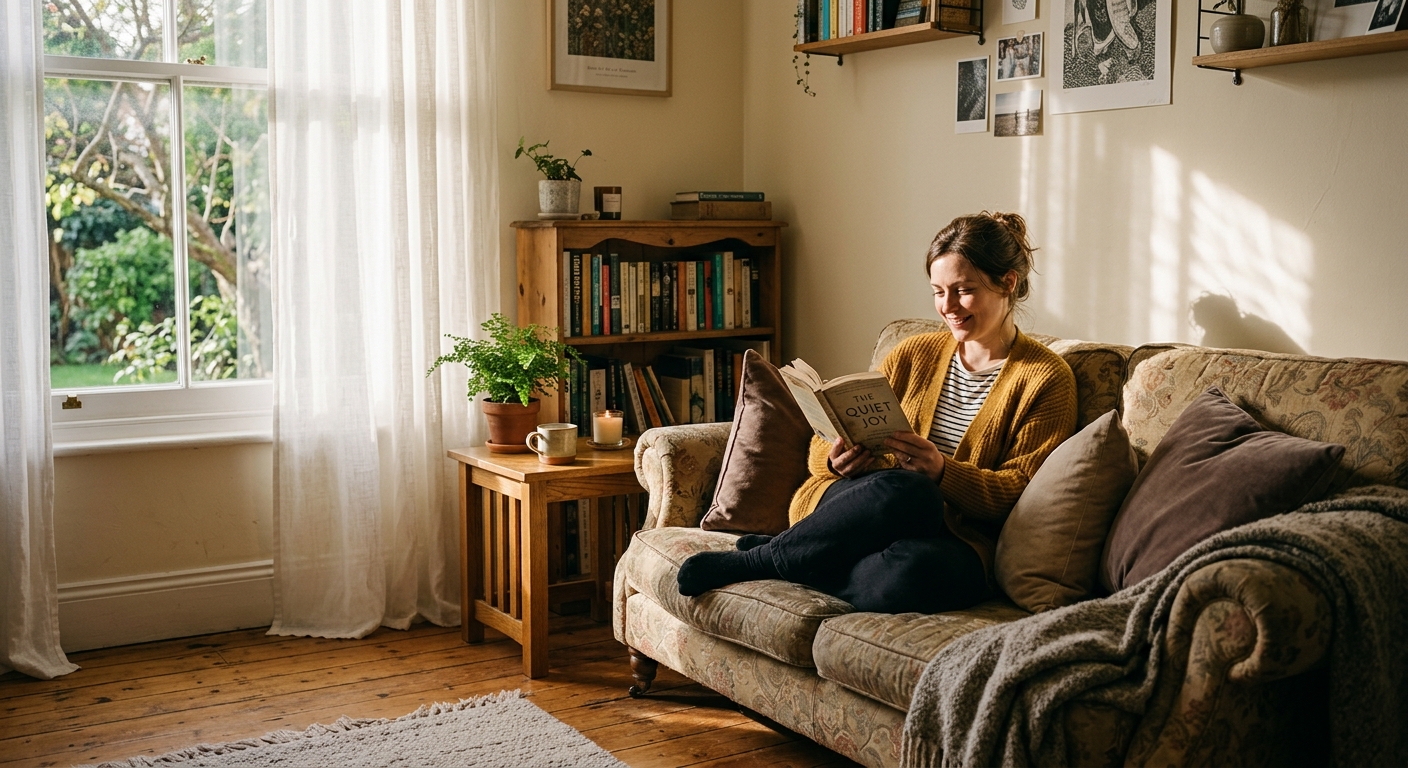
Joy used to sit uncomfortably on my shoulders like a coat that never quite fit. I craved it, yet didn’t trust it. It felt like a high-interest loan, lurking with the promise of eventual payment in disappointment. Joy for me needed a receipt, permission, a signed affidavit as if happiness needed a legal right to be in my life.
The tension of unclaimed happiness is its essence. It’s a kind of joy that doesn’t announce its arrival with fireworks but creeps in silently, like the loosening of a tightly wound coil. It exists in the stillness when I finally stop bracing for impact, that rare moment when I allow myself to breathe deeply without pretense.
For many years, conditioned vigilance taught me that joy must be legitimized by struggle. It has been fed by a culture that programmed us to see happiness as the fruit of labor, waiting at the finish line of productivity. Yet, joy in its truest form is chaotic, non-linear, and sometimes just the absence of tension.
I’m learning that practicing presence, allowing joy to lounge undeservingly on my couch, is an exercise of the soul. It’s a challenging skill, one that calls for letting go of the need for justification. This isn’t denial of reality. It’s finding moments where the sunlight hits the floor beautifully, or feeling my heart beat unfettered, acknowledging them as enough.
What if rather than demand a logical narrative, we allow joy to just be? Can we sit with it, not as indulgence but as a birthright we don’t have to earn? Presence, the radical acceptance of the current weave in life’s tapestry, tells us joy needs no explanation, no grand reason to exist. It just does, and in moments of quiet companionship, that’s plenty.