
Garments That Unshackled My Skin and Let My Body Breathe
Sometimes I think about the feeling of cotton—plain, hem turned up by trembling hands, how Mama used to press her palms to my shoulders, pulling, tucking, cinching me into armor for the world to see. A Black boy, a little round around the edges, fit into clothes that never fit, seams sneering against flesh that wanted to unspool, to spread soft and wide across Sunday pews and muggy summer front yards. I’m still learning what it means to let fabric touch me kindly.
I learned early the gospel of hiding. Fat boys in church, in family photos, in the eyes of their fathers, all of us are supposed to fold ourselves smaller, less seen, tidied up so white shirts could button all the way and nobody had to ask if we wanted seconds. I remember the prick of polyester against my underarms, white pressed close like a lie, and how my skin would sweat against itself by the time the choir reached the third verse. Outside, cicadas shrieked and the choir answered, but inside I chewed at the raw corner of my lip, thinking if I just held my stomach in, I could be less.
Sometimes, walking through the men’s section, the world would shrink with me. “Husky.” “Relaxed fit.” Names that sounded like apologies, printed in sizes that never felt like enough stretch. Mama would hold up pants and look at me, not at my body, not at what the jeans refused to soften for. Shame is a seam, tugged tight by the hands of everyone who thinks they’re helping you cover what they see as mistake.
They say queer folk make family wherever they are, and sometimes that’s the tender sigh when you cross your own threshold at night, toes out of shoes, shirt snatched off, fat let loose to breathe how it wants. Some nights, alone in my room, I’d watch my belly rise and fall in the amber lamp-light, the slow tide of it, abundance I was told to hide but could never erase. Sometimes I’d press my own hand to my softness and imagine kindness—a gesture most folks reserve for their mothers, their lovers, a way to say “I see you” in the hush between breaths.
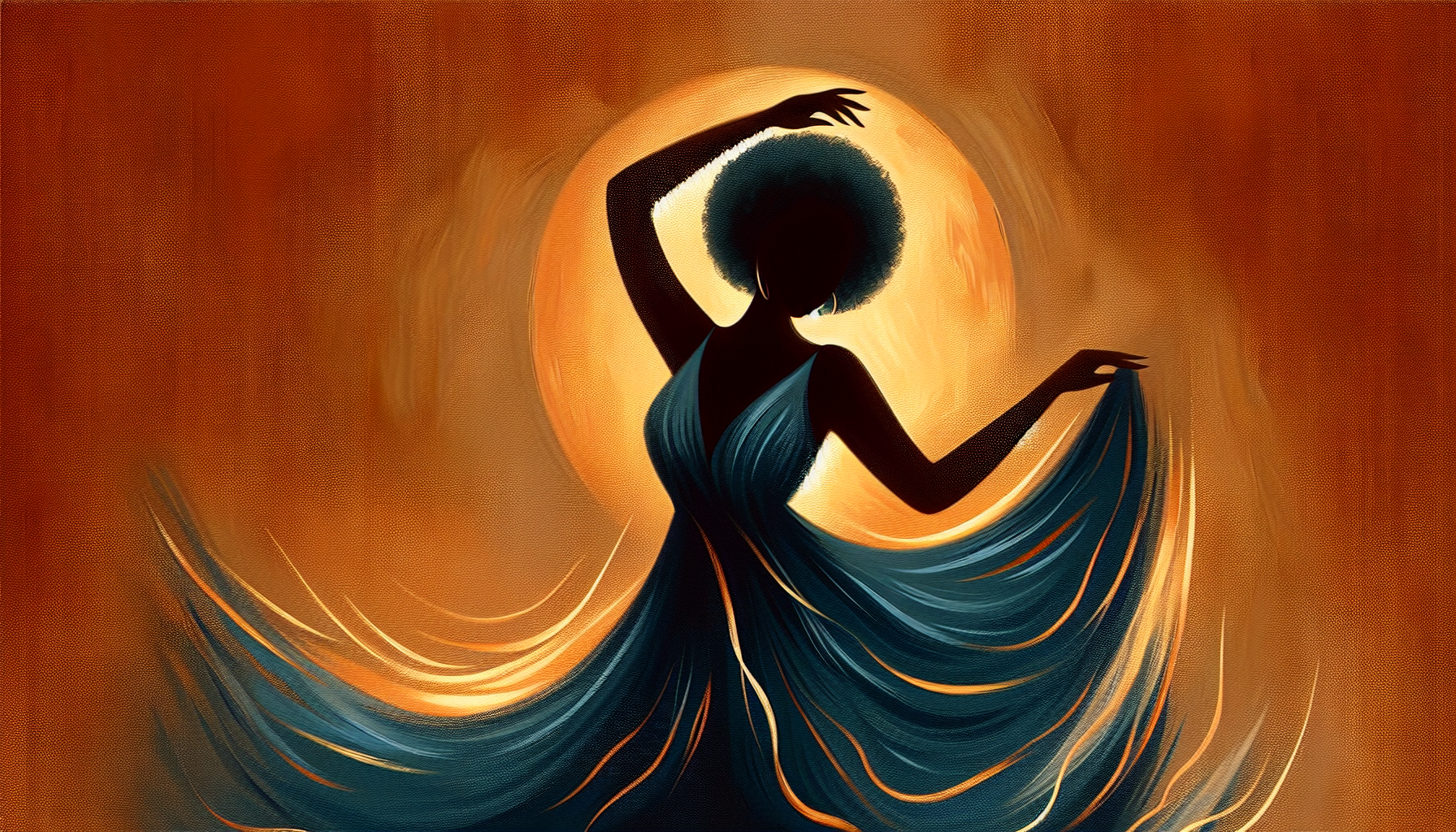
Somewhere between the constraint and the hunger—I began to find secrets in fabric, ways to be. In thrift stores, I tugged silks meant for someone else, my uncles’ old sweatshirts with cracked HBCU letters, skirted my hips in things I wasn’t “supposed” to wear. The first time I wore a dress in public, my heart was a fugitive rabbit—pounding, then trembling, then still. That deep blue dress, cut loose to the thigh, swayed with my belly, my arms exposed, brown and dappled with stretch marks that looked like rivers—my own geography. The sky didn’t fall, only opened up, June hot and generous. People looked, but they had always looked. Now I was not a mistake, only a question I had stopped answering.
Somewhere in that first breath of air against thighs too often smothered in jeans, I tasted something holy. I remembered the Sunday preachers saying the body is a temple, but mine had always been treated like a warning. Too much—too Black, too queer, too unshapely for praise. I wanted softness to be sanctuary, for my flesh to mean belonging, for my hips in a garden-printed skirt to be enough prayer. To feel fabric drape instead of squeeze—that is a liturgy of its own.
I do not forgive the world for how it looked at me. Or for how it still looks. Some days, even strangers’ stares feel like hands, clumsy and heavy, wanting to press me back into shame. Fatness, especially in a Black body with roots deep in Southern clay, comes with armies of whispers—doctors with scales, aunties with pursed lips, boys with laughter sharp as barbed wire. I have learned to hold the ache evenly, to let laughter bounce inside me, uncut by hunger.
There is no romance in rejecting your own body, but there is discipline—a quiet, curving dare that comes with claiming space. I walk into a room now and feel my wake—small tremors as I move, thighs brushing, arms swinging unashamed, shoulders wide. Queerness cracked me open: let softness leak out and drench my speech, made me want to dress up my grief in velvet and joy, earrings like gold sorcery, eyes lined with fate.
Here’s what I know: there’s wildness in loving yourself out loud. My closet is a rainbow of rebellion—cotton in colors my mother never let me wear, crop tops that bare my belly and say “This space is mine.” I wear leggings because they hold me without judgment. Silk scarves sweep like devotions across my neck. I am not always brave, but my body wants to be celebrated, wants to exist, loudly, fatly, without translation.
Mirrors and I still argue. There are days I want to disappear, hours when fabric feels heavy and strange. There is a particular sorrow in seeing the disconnect between how I feel and how I am seen. But then I remember: the shape of my joy is not for anyone else. I slip on that tight pink shirt with the gold buttons, let my belly spill into sunlight, and step into the world.
Let them stare. Every dimple and roll, every quiver and sway, belongs. I am wrapped in the fat of my ancestors—women with hips like armchairs, boys whose bellies jostled when they laughed. I am soft for the child in me who tried so hard to disappear. I am loud for the man I am still becoming, the one who knows: every garment I choose now unshackles me, makes my skin a hymn instead of a hiding place. When fabric blesses, when it gives, that’s when I remember—I was never meant to shrink, only to bloom.
Tonight I undress in a room that belongs to me, let my skin breathe like a psalm, lithe and sacred. I touch my flesh—folded, unfurled, alive. I want to live in a world where softness is not a sin, where being full is never failure. I want to dance down the middle of the street, pleats at my calves, shirt clinging to my belly, and laugh—loud, Black, queer, fat, whole. This, I am learning, is what freedom feels like: what it means to wear yourself, unshackled, and call it holy.