
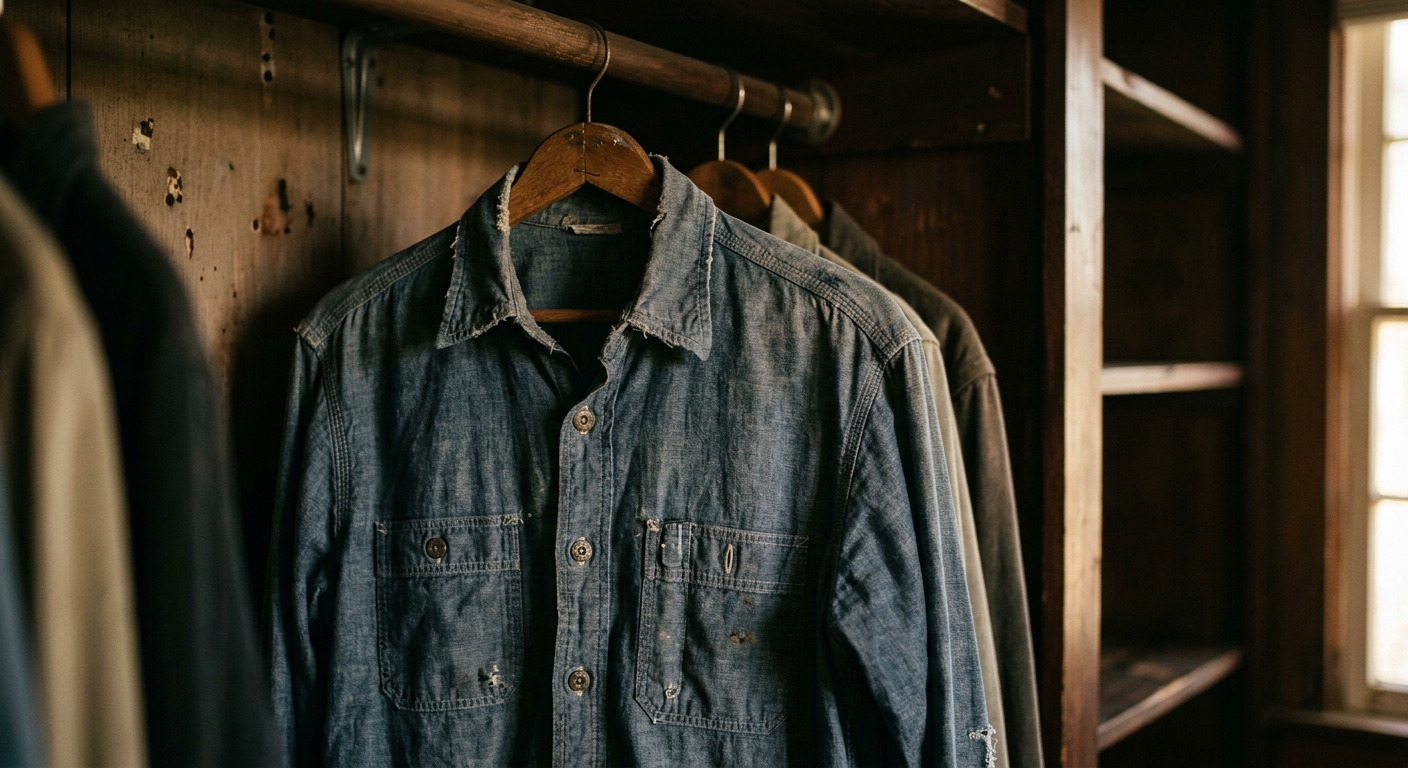
There’s a shirt in my closet that knows more than it should. It’s the kind of garment that whispers its own mysteries when the room is quiet enough to hear. The thing is, it’s just a shirt—a piece of fabric cut and sewn, a neutral party. But when I slip it on, it becomes a silent partner in a conspiracy. It’s the good shirt, the one I turn to when I need to feel like I’ve got it all together, even when I don’t.
It’s not that the shirt makes me a different person. It just knows the choreography of confidence. The shoulders sit just right, and when they do, so do I. It’s a shirt that says, ‘I came ready,’ without revealing the surveillance mission the buttons have been on since January.
I learned to make effort look like ease. Over the years, I’ve honed the skill of disappearing the work behind the polish. Professional rooms demand it—show up prepared, polished, but not visibly strained. This shirt fits into that narrative. It tells the room, ‘I did the work,’ but it doesn’t mention the fitting room, the tailoring, or the price.
I could pretend that the labor of looking effortless is a burden, but I won’t. Style isn’t oppression. Still, I can’t help but notice how the world admires the finish while treating visible effort as evidence of inadequacy. Effort must be present, yet invisible. It’s a rule that extends beyond clothing, and I’ve owned good shirts in several sizes.
One shirt belonged to a body that needed structure for protection. Another belonged to a body changing so quickly the purchase felt temporary. A newer one fits in a way I once thought would solve something larger than fit. It doesn’t. It just fits. The shirt changes the room, not the world. I stand differently when it sits correctly on my shoulders, and I notice how people respond when clothing signals expense, intention, and authority. It’s a game of mirrors, and the shirt knows it well.
But here’s the turn: the older shirt was doing its job under different conditions. It helped me enter spaces that had already made decisions about larger bodies, black bodies, soft bodies, and queer presentation. I can celebrate the current shirt without putting the previous one on trial. That’s a turn I have to make repeatedly because culture offers the crueler version for free.
So, let the shirt hang there, a witness to the contradictions it has to hold. It doesn’t resolve anything, really. It just supports the small acts of rebellion I perform each time I put it on. The shirt tells no lies, but it knows when to keep its secrets.