
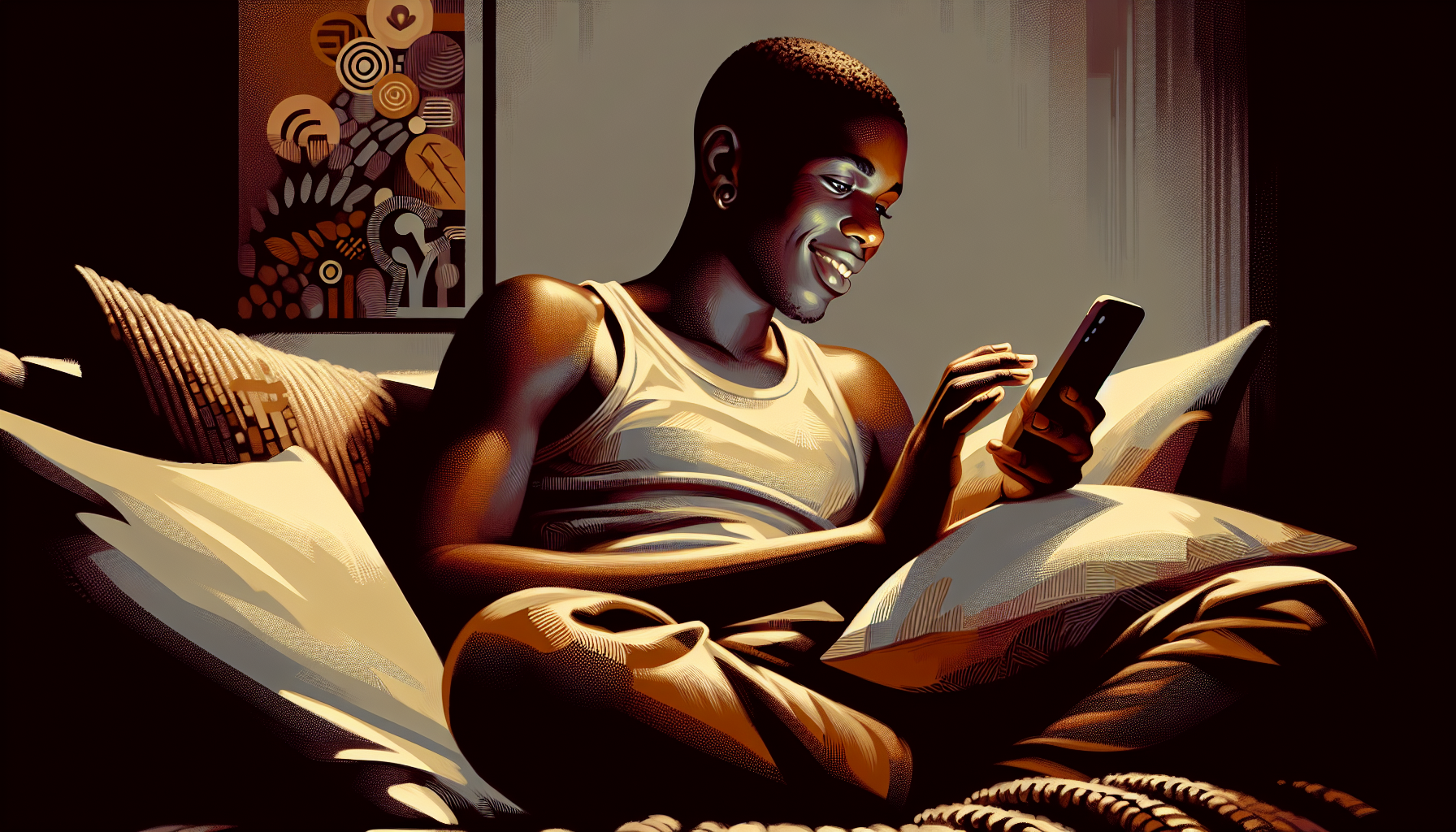
When I saw myself onscreen, I felt seen—like my own laugh finally echoed back at me, not just in the room but through the screen. It happened the other night, watching this scene where a Black queer character just sat, legs tucked under, scrolling on their phone, humming along to a song only they could hear. Nothing dramatic. Just a moment that looked like how I live, how I love my quiet, how I find my own rhythm even when the world’s playlist is chaos.
What got me was the softness. No code-switching, no performance, just honest-to-God comfort. I saw the way they let their face be soft, unguarded. It made me remember being sixteen, sneaking moments for myself in my childhood bedroom, headphones on, trying to figure out if I was supposed to move like the boys or the girls or some secret third thing. Seeing that character let their guard down, even just to scroll and hum, felt like a permission slip I didn’t know I needed. Like, oh, I can just exist? Be Black, be queer, be soft, all at once, in a world that rarely hands out that kind of okay?
There’s something about recognizing your own quiet joy onscreen that hits different. It’s not a parade, not a rainbow explosion, just the everyday tenderness of being allowed to take up space in the smallest ways. I felt my shoulders drop, tension I didn’t even know I was carrying. It’s wild how a little scene like that can be a mirror, a reminder that my softness isn’t invisible, not really. Somebody saw it, wrote it, filmed it, and there it is—proof.
I guess what I’m saying is, sometimes the loudest way to be seen is just by existing out loud, even if it’s a soft hum on a Tuesday night. That’s the kind of scene that stays with me. That’s the kind of reflection I want more of—simple, real, and just a little bit tender.