
Living Out Loud in a Body the World Once Doubted: A Symphony of Defiant Grace
If my body was once an apology, it is now a sermon. There’s a blood-deep joy in that: becoming chorus, crescendo, not just the echo of shame, but the music itself. Sometimes I trace the roundness of my arms with my thumb and remember when I tried to shrink—tried to inbox my soul, fold my softness, tiny as a wish, invisible as an unsaid prayer. Now, I let these arms rest on tabletops like a declaration, not a mistake. To live out loud, in this Black, queer, soft, Southern body, is to love a revolution I’ve had to raise from the dead.
The fat on my thighs, the slow symphony of my steps, the way my belly presses against my shirts with a gentle insistence—I used to weigh every movement like sin, as if any joy I owned in this flesh was a crime. When I think “grace,” I no longer think of the white church pews I sat in as a boy, knees awkwardly pressed together in Sunday best, feeling the eyes grazing over me, taking up inventory. Now grace is something I find in the mirror, half lit by afternoon: the way my neck turns, soft rolls forming at my collar, making a geography I’ve learned to name as beautiful.
A Black queer child learns early, from family, church, TV—sometimes even their own trembling fingers—how to make themselves digestible. I learned to shrink at the dinner table, say no thank you to cornbread, ignore the peach cobbler even as the syrup called my name. Aunties who loved me would pinch my cheeks and murmur, “baby, you’d be so handsome if you’d slim down a bit.” They didn’t mean harm. They meant worry edged with love, protection painted over with old pain. But I wore it just the same, like a too-small coat in a too-cold winter.
The world reads my body in headlines, stares, jokes in barbershops, the quiet calculus of airplane seats and department store clerks. Fat meant shame, it meant “unhealthy,” it meant a waiting room for real life to begin. But I remembered, slowly, that the world could not read my softness the way I lived it. They saw weight, I felt story. They saw excess; I learned to see abundance.
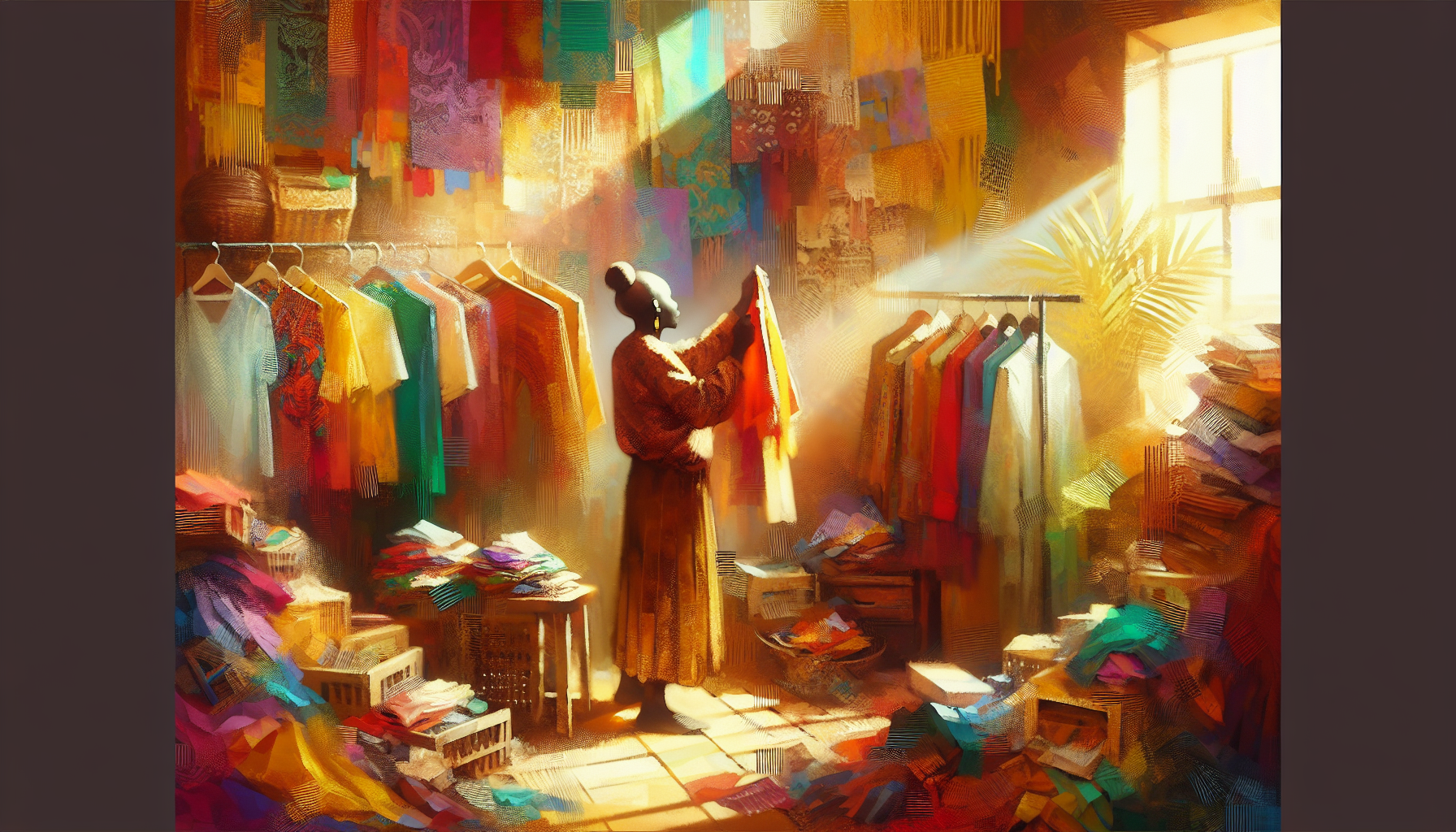
Walk with me: it’s the start of June, sun hanging above the oaks, air thick with summer and childhood. I’m standing in front of my bedroom closet, clothes scattered everywhere. For too long, getting dressed meant camouflage—monochrome shirts, baggy jeans, hoodies in August heat. Survival logic: if I could not be thin, maybe I could be invisible. But today, I pull out yellows, bold prints, shirts that hug the fulcrum of my belly, and I slip into red pants that hold my thighs like a lover. I laugh, remembering my grandmother’s warning: “Don’t you wear red, chile, make us seen.” Yes, Nana. I want to be seen. Not for apology, but for testament.
Moving is different now. There was a time when my own body was a source of exile—running in gym class, tripping over my own feet, flinching from the memory of hands, words, snickers. Running from the mirror. Now, movement feels like rebellion. I stretch, arms arching overhead, hips swaying to music in the kitchen as I cook collards and sing gospel softly under my breath. There’s a holiness in the swing of my hips, a kind of prayer in each sideways glance at my reflection, at ease. To live in a fat body is to become acquainted with limits, aches: knees crackle, breath deepens. But who decided softness was not strength? My body holds ancestors, holds secrets, holds all the honey I’ve yet to taste.
Fatphobia sticks to me like Southern humidity—hard to shake, always there, a gritting on the tongue. In public, folks look through, or over, or at me too long. In clubs, I’m a curiosity—sometimes I am desired for my size, sometimes despised. Grindr boys want “thick trade” or nothing at all. In church pews, I’ve been lemon-juice-ignored, both too gay and too fat for the Lord. In the classroom, I learned to wear wit and wisdom as armor, sharper than the roll of my stomach under my shirt. I unlearn the lessons, day by slow day, between the covers of radical Black queer poets whose words taste like home bread—Audre, Essex, Danez—people who drew maps where there were none.
Sometimes, late at night, I wish someone had told little me that beauty is not rationed by the pound, not determined by the flatness of a stomach or the ability to pass in borrowed polyester. That deserving is not a question answered by scale or calorie count. That joy does not require atonement. But even if no one told me, I’ve started telling him now: you are already a miracle.
Love, in this body, is a wild tenderness. When someone runs a hand along my side, fingers sinking into those hills and valleys, the world slips away. There is no room for shame in such intimacy. Alone, sprawled naked on clean sheets, the fan humming as my flesh warms under a July evening, I trace my own skin with gratitude. I have survived every insult, every cruel math, every moment I believed I was too much or not enough. I run my hands over belly, chest, thighs, mantra-singing: this is mine. This is mine.
Living out loud means being willing to take up two seats, daring to laugh raucous and full in public, eating dessert with abandon, wearing colors bright enough to rival azaleas. It means letting softness bloom where I was told to wither. It means that grief and joy can coexist—a kind of funeral and a festival in the same ribcage. It means refusing to be a warning story, being my own homecoming.
I do not pretend the world has changed; the violence is often quiet, sometimes loud. But I have learned to gather joy like pecans in the backyard, enough to last through the winter. Each day I claim space is a hymn echoing through me, braiding together the old griefs and new joys: a symphony of defiant grace.
Tomorrow, I will dress myself in sunlight, drape softness over bones, walk through my city knowing my body is not a question to be answered, but a song to be sung, over and over, loud enough to drown out doubt. I will move through this world boldly, tenderly, living in the fullness of what the world once doubted—but what I know, now, is more than enough.