
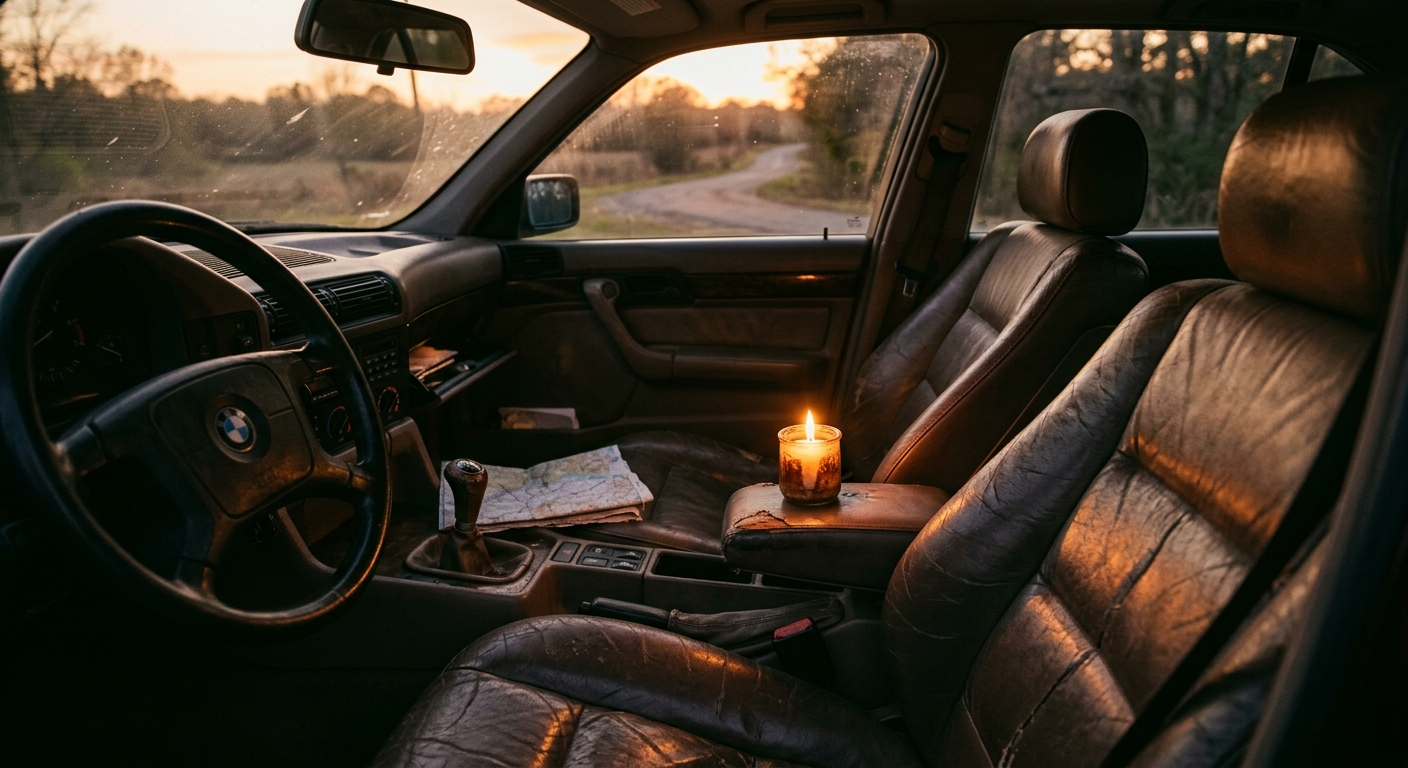
The candle was burning in the center console of my late-model sedan, as if the car had decided to host a vigil. I’d parked in the garage, turned off the engine, and sat in the kind of silence that only a car can offer—sealed, cocooned, but still full of the world’s muffled insistence. I was still playing the part of a man who had it all together. The right kind of laugh, the right kind of handshake, the right kind of silence. But the candle flickered, and I let it.
I don’t know what broke first—the mask or the dam. A slow, unremarkable drip of tears started, the kind that doesn’t announce itself with wailing or chest-heaving. Just a quiet release, like a pressure valve finally doing its job. Twenty years of scripts and costumes and stage directions, all soaked into the fabric of my being like sweat into a summer shirt.
I wasn’t broken; I was just tired of playing a role that had been handed to me, a script I never chose. And in that dim, flickering-light moment, I heard it: You don’t have to keep doing this. You never did. It wasn’t a revelation shouted down from the heavens, but a whisper from somewhere deep, somewhere bruised but inexhaustible.
What I felt was not weakness, but the kind of clarity that comes from finally seeing yourself without the costume. I realized how much grief there was in carrying a version of myself that was never mine. How much energy I had spent calibrating my gestures instead of my character.
And for once, I didn’t try to stop the tears. They weren’t proof of failure; they were the first honest thing I’d felt in a long time. And maybe, just maybe, they were the first step toward whatever comes after the performance ends.