
The morning started with a negotiation that nobody wins. My alarm went off like a fire drill, and I began bargaining with time. Seven more minutes in bed, and I could still pull it off. Skip one step in the routine, and I get three minutes back. I planned an outfit, but the closet had other ideas. This is pre-production, not getting dressed.
Jay’s approach to mornings is a calm efficiency I respect but cannot replicate. He knows where his keys are. He doesn’t check the weather app like it’s going to change the forecast just for him. I, on the other hand, stand before two shirts that are indistinguishable, asking them what kind of day they think it is.
Before I am an educator, artist, or husband, I am the morning manager of Kabal Briar, a department that runs on strong opinions and a questionable budget. I assess the body, the weather, the energy, and whether the glasses will clash with the rest of the face. Some people call this getting dressed; I call it pre-production.
The real work begins when the day does. Devices, systems, meetings, teachers, students, questions, and at least one object blinking in a way it did not yesterday. I enjoy solving a problem with edges. A setting is wrong, a device won’t connect, a student needs better access. These are honest problems.
Human systems rarely offer that courtesy. Sometimes the equipment isn’t the issue; the process around it is. A device sits in a room without a plan for who will charge it, update it, or remember why it was requested. I become the translator, turning technology into ordinary language, urgency into requests that can be heard.
Competence feels good in the body. It makes the room trust you. But it also makes the room forget that competence eats lunch. I put my lunch in the microwave, answer a message, and return to find it cold again. By the third heating, I eat standing up. That’s the kind of detail nobody includes when they call you dependable.
My life is a series of roles that overlap like a Venn diagram of ambition. I am an educator, a student, a writer, a husband. None of these is a hobby; that’s the problem. A hobby is supposed to be something you do without converting it into output. I don’t know her well. I approach hobbies like a development team. I can turn inspiration into debt very quickly.
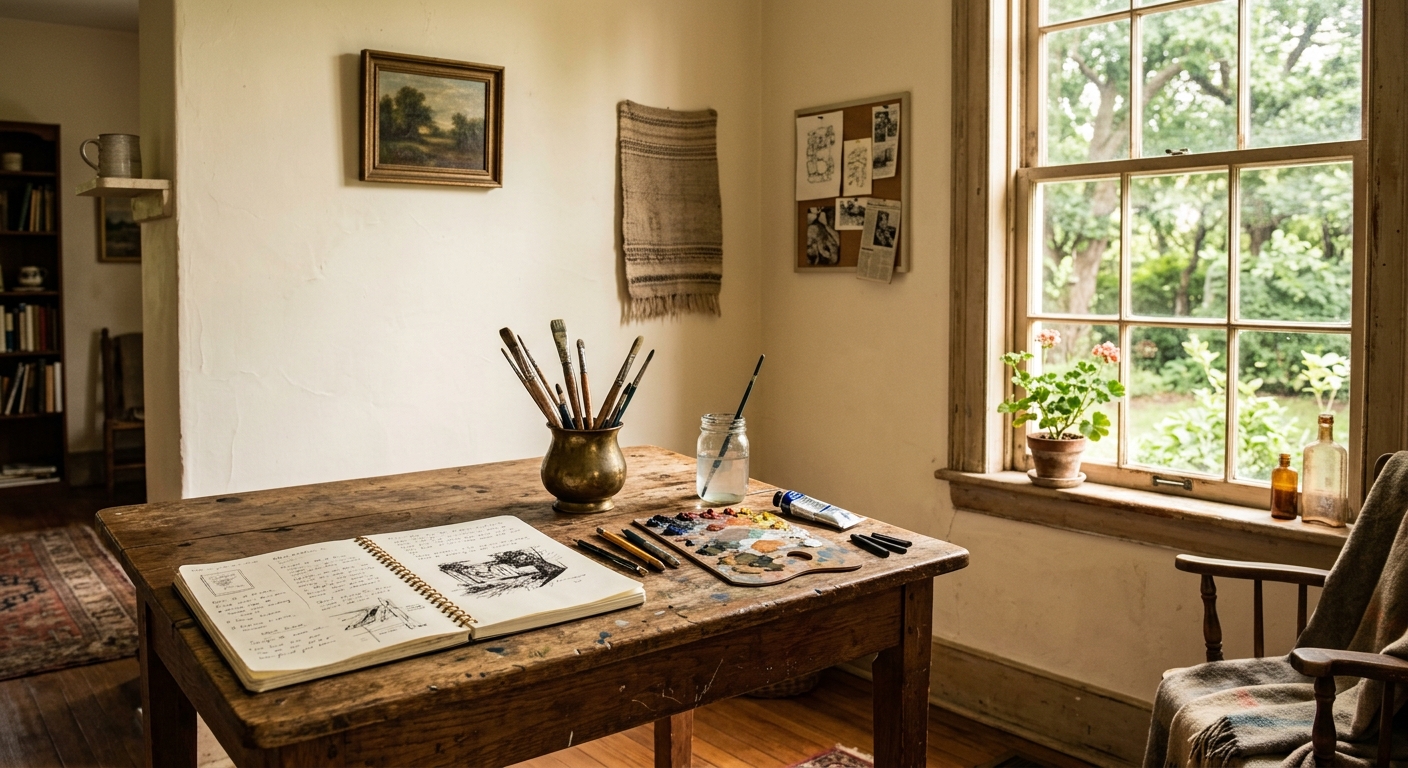
One night, I decided to do something solely for enjoyment. I bought art supplies, cleared space, and promised myself the result didn’t have to become anything. Ten minutes in, I had a title. Fifteen minutes, a series. Twenty minutes, I was considering paper size for an exhibition that didn’t exist. Baby, I hadn’t even finished the first ugly little drawing.
So I made a rule: no photographs, no names, no meanings. I could make the thing, dislike it, and put it away without turning it into a project. The rule made me uncomfortable, which was useful information.
There are jobs we put on resumes and jobs that live inside relationships. The emotional manager, the planner, the fixer, the person who makes every room easier for everyone else. Compliments can be job descriptions with no vacation policy. I’m learning to ask myself a rude but useful question: Did I choose this? Or did I become good at it because nobody else stepped forward?
Before bed, I check the phone. Mistake presented as closure. An email, a message, a reminder, an idea, and a document notification. All could wait, none identifies as waiting. I tell myself I will only look. Looking becomes answering; the day begins again.
I have too many jobs. Some are paid, some are chosen. Some need to be resigned from quietly. My goal is to stop asking every role to prove that I matter. That may be the only job I cannot complete through better organization.