
The movie promised everything I usually claim to want: a suspicious mansion, a hallway without practical lighting, and a cast dressed like they were attending a glamorous funeral. It began with a slow cover of a song that didn’t need slowing, and a mirror cracked before we knew why. Jay asked if it had good reviews. I said it had atmosphere, which wasn’t the question. The reviews were terrible, but ‘narratively undisciplined’ sounded like a woman changing dresses four times without explanation. I needed to see.
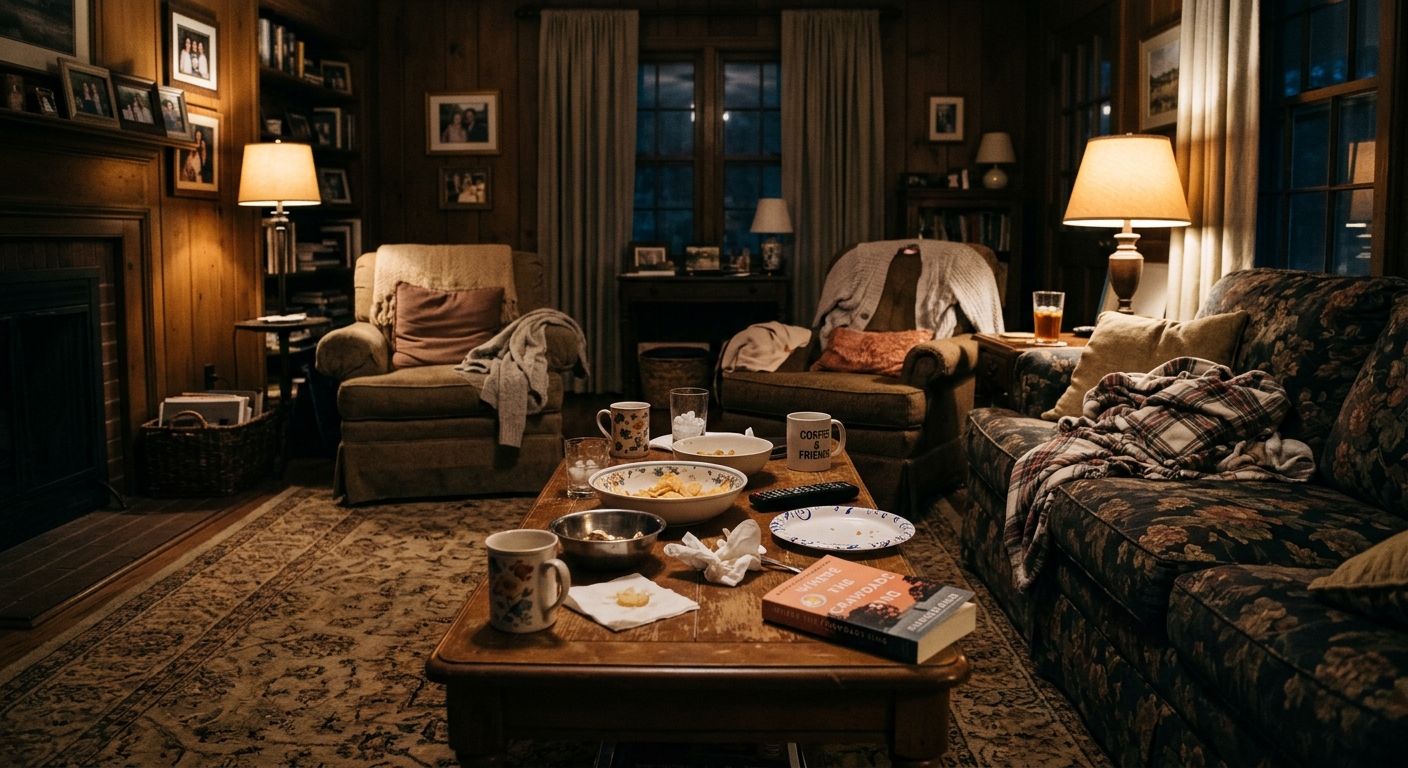
We arranged the room. Snacks, dim lights, drinks. I changed into clothes that said the public no longer had access to me. Jay had the remote, which is wise because I pause to discuss production design and act surprised when the runtime becomes an evening commitment.
The movie began with a title card so serious I almost laughed. A character whispered information nobody would say unless they knew an audience was present. Jay and I exchanged a look; the evening had changed categories.
A character heard a sound upstairs after being explicitly told nobody was upstairs. Instead of leaving the house, she picked up one decorative candle and began climbing. I sat forward. Jay said, ‘No, no,’ not to me, to her. The music announced danger before she reached the first step. A portrait on the wall appeared to follow her with its eyes, which would have been alarming if the portrait hadn’t looked mildly embarrassed to be involved.
When the movie succeeded, we blamed the technique. Five minutes later, a character revealed information that contradicted something the movie had shown us directly. I paused it, not for clarification, but for witness. Did they not just say the opposite? Jay said yes. I rewound. The character did in fact say the opposite. We stared at the screen like the film might apologize. It did not.
People often use ‘bad’ and ‘boring’ as though they’re the same judgment. They’re not. A boring movie can be technically competent. Everyone knows their lines, the story arrives where it said it would. Nothing is wrong enough to become interesting. A bad movie can be alive, reaching for something ridiculous and missing with enough force to create weather.
The movie introduced a flashback without changing the lead actor’s hair, clothes, lighting, or apparent age. We didn’t know it was a flashback until a dead person walked into the room and everyone on screen behaved like this was normal. I paused again. Jay asked whether I planned to let the movie finish. I said the movie had already demonstrated that finishing was not its priority.
This is why bad movie nights can be so intimate. You learn how another person notices. Jay may catch the plot hole. I may catch the sleeve. A friend may repeat one line until it becomes better than the entire script. The movie gives you material, but the evening belongs to the people in the room.
Critics are right to judge a film by whether it accomplishes what it attempts. I am also allowed to judge a night by whether I enjoyed living through it. Those are not the same review.